
Failure pattern
Payment State Drift
Payment inconsistencies are rarely about one invoice. They appear when commitments, execution, approval, invoicing, and payment status are allowed to drift across multiple records.
These failures appear when commercial truth has to be reconstructed from contracts, milestones, invoices, payment processors, spreadsheets, and messages. Unpaid work, duplicate billing, delayed invoicing, and disputed status all point to the same flaw: agreement, delivery, approval, and payment are not controlled as one state machine.
01
Manual coordination as hidden enforcement
Hidden Enforcement
If the team has to remember whether work was awarded, approved, billed, or paid, the commercial rules are living in coordination work instead of the system.
Payment state drift directly affects cash flow and trust. When the system cannot show what was agreed, what was delivered, what was approved, what was invoiced, and what was paid, finance and operations spend time debating records instead of moving work forward.
02
Where It Appears
Where It Shows Up
Marketplaces, contractor platforms, project delivery businesses, service operations, subscription workflows, milestone-based work, procurement flows, and approval-heavy billing processes.
Teams that manage contracts in documents, work status in project tools, invoices in accounting software, payments in a processor, and approvals in email or chat.
Businesses where work can continue while the commercial state is incomplete, disputed, outdated, or unknown.
03
Signs this pattern is present
Operational Signals
- 01
Contracts, milestones, invoices, and payment records are updated in separate places and only compared when a mismatch becomes visible.
- 02
Operational progress can continue even when billing or approval state is no longer aligned with the work record.
- 03
Ownership of what was agreed, what was delivered, and what is still unpaid depends on manual reconciliation.
- 04
Teams rely on exports, spreadsheets, or message threads to determine the real commercial state.
04
Invalid state allowed by the system
What Breaks
Milestones and invoices drift apart, so the operation loses a single source of truth for what is due and why.
Execution can continue on incomplete or contradictory commercial state because the system does not block invalid transitions.
Disputes take longer to resolve because agreement, work state, and payment evidence are scattered across records.
05
Control replacing reconciliation
What to Enforce
The system keeps the award-to-payment flow inside one execution path.
Commercial transitions are allowed only when the prior state is valid, so approvals and billing remain aligned with execution.
The operation can see what is agreed, delivered, invoiced, and paid from one trusted record instead of reconstructed history.
06
Control Requirements
Required Controls
- 01A commercial record that ties together agreement, scope, milestone, approval, invoice, payment, refund, dispute, and cancellation state.
- 02Status transitions that block billing before required approval and block fulfillment paths when payment or authorization rules require it.
- 03Idempotent payment and webhook handling so retries, duplicate events, and delayed processor updates do not create duplicate commercial state.
- 04Clear exception paths for partial payments, credits, refunds, chargebacks, rejected work, scope changes, and manual finance adjustments.
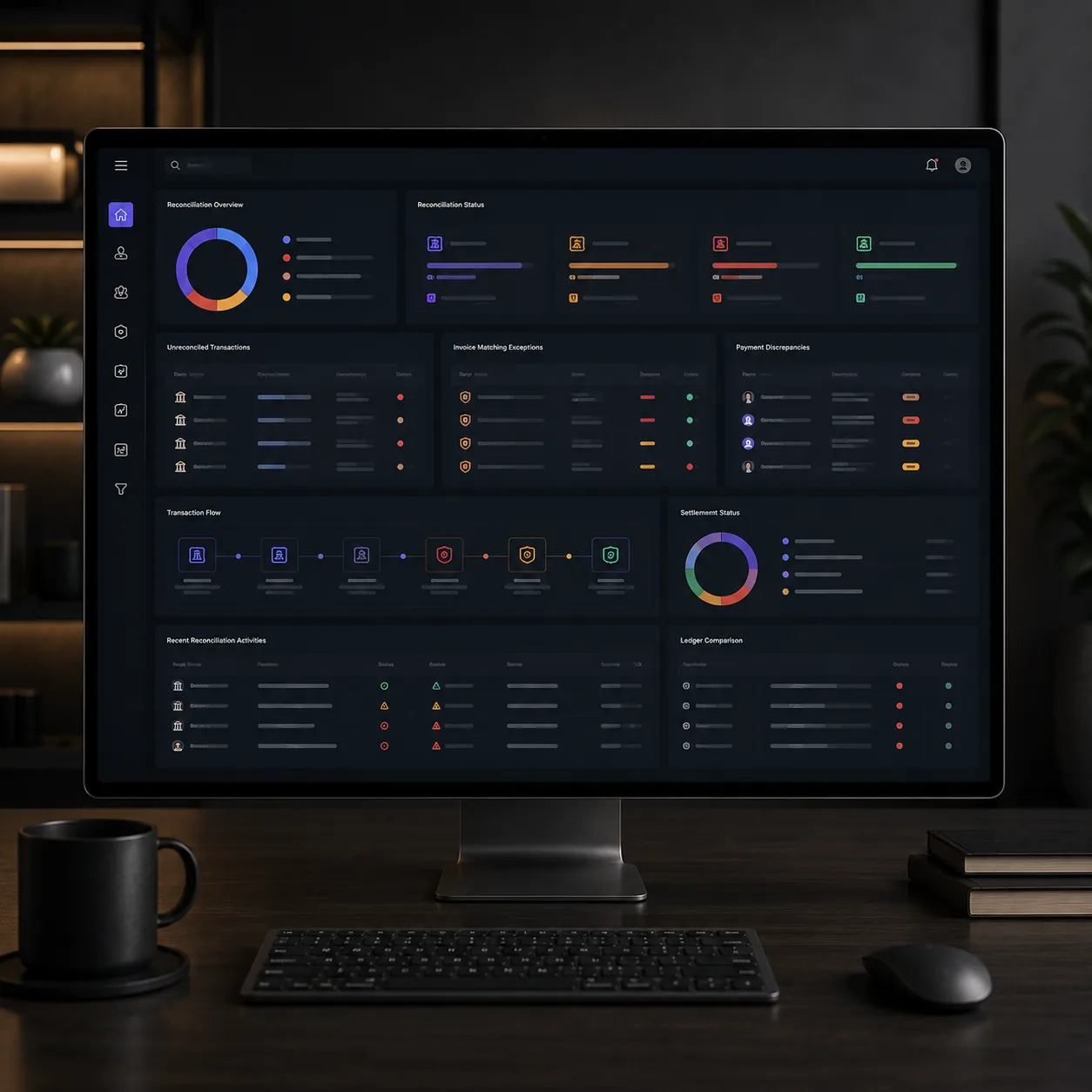
- 05Reconciliation views that expose mismatches early rather than after month-end, customer escalation, or cash-flow review.
07
Implementation Notes
Implementation Shape
The system should treat payment events as external signals that need validation, idempotency, and mapping into the internal commercial lifecycle.
Accounting integrations are strongest when they receive clean state transitions, not when they become the only source of truth for operational work.
Approval, invoicing, and collection logic should be modeled explicitly enough that support, finance, and operations read the same commercial status.
08
Diagnostic Questions
Diagnostic Questions
Can work be marked complete before the required approval or billing condition exists?
Which record decides whether a milestone is payable, invoiced, paid, disputed, or refunded?
What happens when a payment webhook arrives twice, arrives late, or conflicts with the current internal status?
Can finance see commercial exceptions without exporting multiple systems and matching records manually?
Start The Conversation
Control Payment State
If payment status is hard to trust, start with the contract, milestone, invoice, and payment steps that need to stay aligned.